Join us for a safe look at our closest star.
Saturday 11th July.
Come and learn how to view the Sun safely, test out specialised equipment, and discover the science of the Sun.
This will help you prepare for the rare event on the evening of August 12th when Guernsey will experience a 94.5% partial solar eclipse. See our Solar Eclipse Page.
What to Expect at the Solar Open Day
Whether you are just curious or a seasoned skywatcher, there is plenty to see and do:
- Live Solar Viewing: Look at the Sun safely through our range of specially filtered telescopes.
- Eclipse Preparation: Learn how to use solar eclipse glasses and DIY projection methods.
- Learn how eclipses occur and what to look for on August 12th.
- Stellarium Simulations: See a virtual preview of exactly how the eclipse will look from Guernsey as the Sun sets on August 12th.
- Sketching Sunspots: Try out your artistic skills with oil pastels and graphite pencils to draw sunspots and other features.
Our Equipment:
Looking at the Sun requires specialised equipment. Never look directly at the Sun with the naked eye or standard binoculars. This is the equipment we will have set up:
White-Light Telescopes
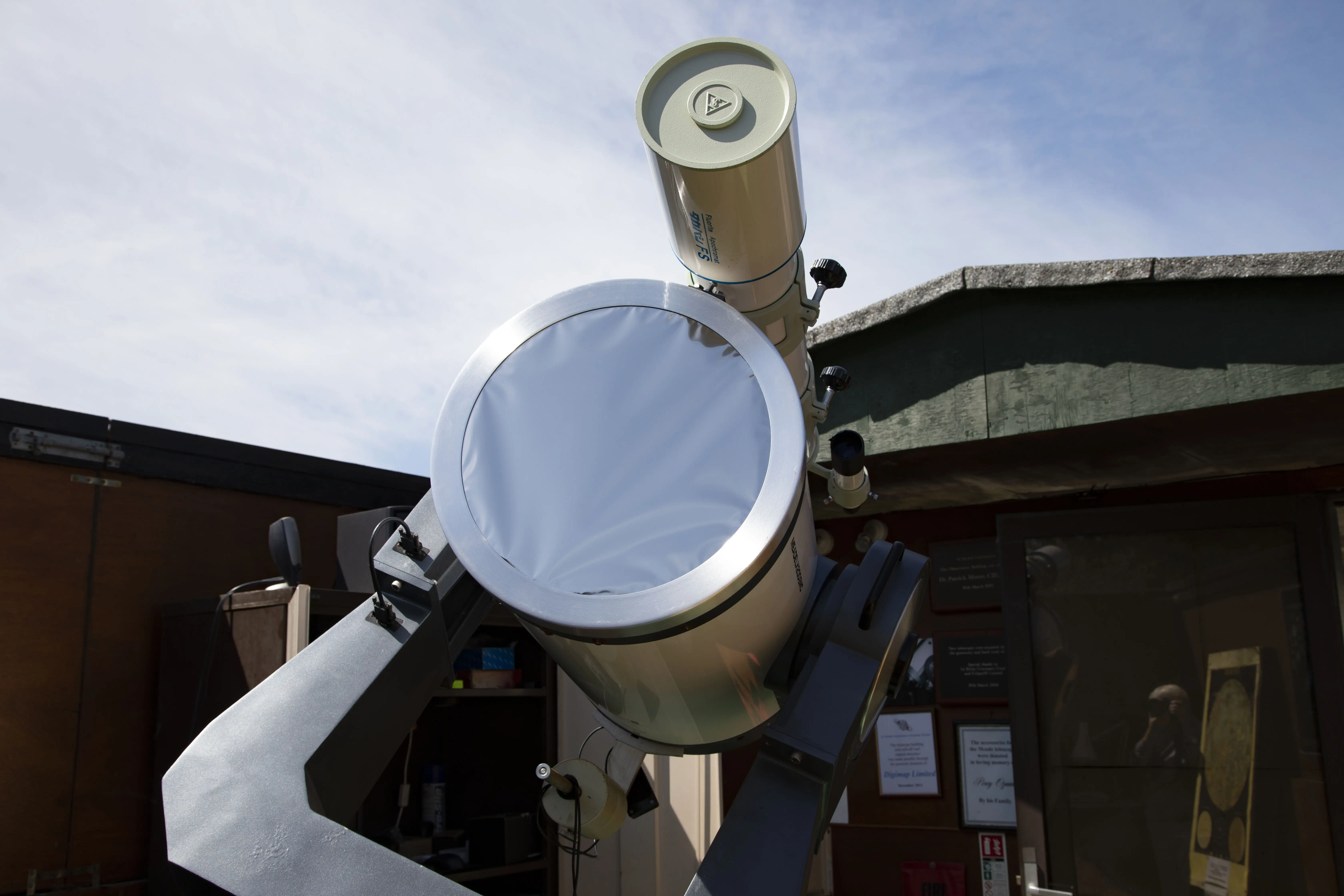
Standard telescopes fitted with professional filters that block 99.999% of sunlight. You will see a white, yellow or orange disc showing the Sun’s visible "surface", or photosphere and detail of sunspots.
The Heliostat
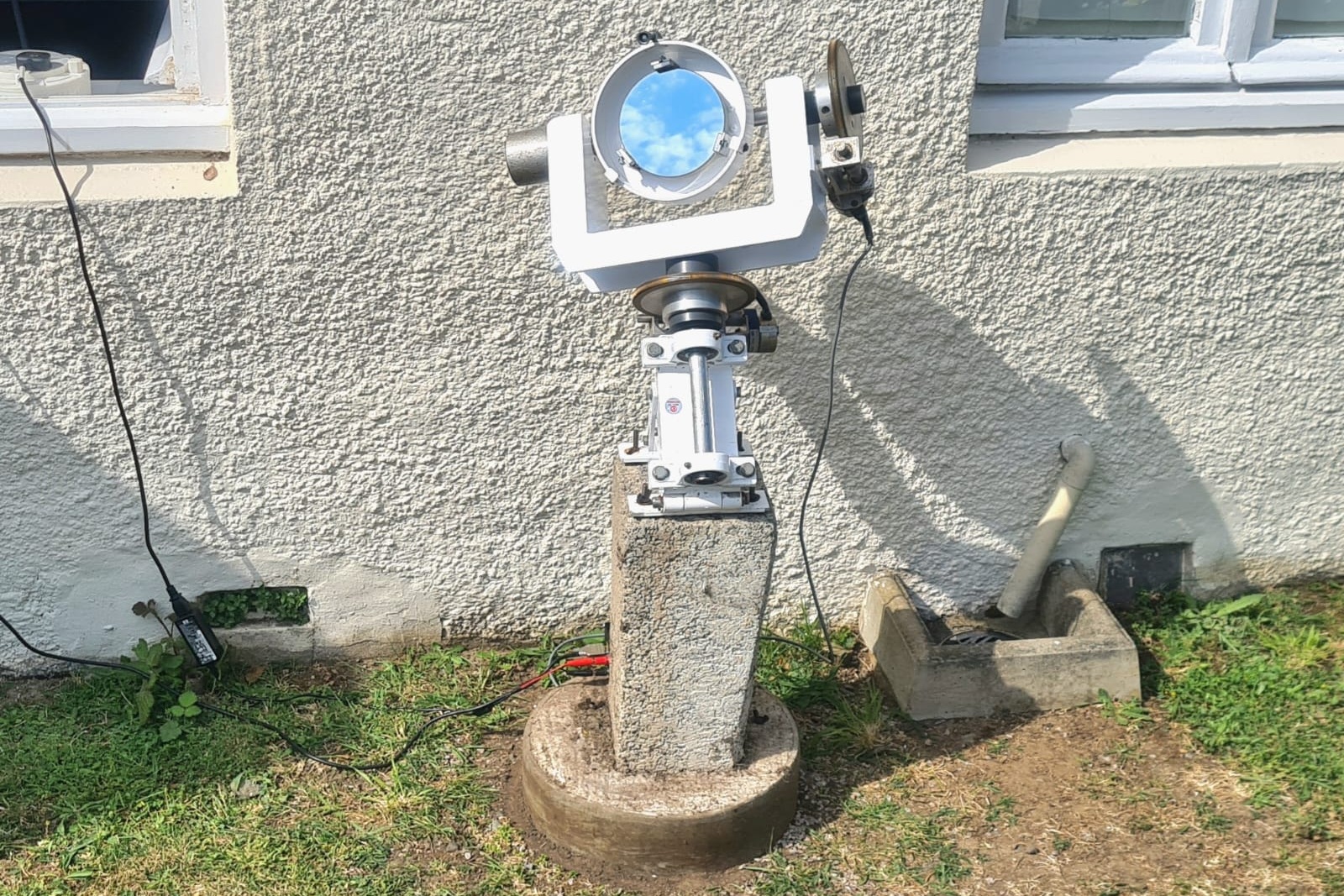
A motorised mirror system that tracks the Sun and projects a large, stationary solar image onto a wall indoors. This is perfect for groups to safely view and track large sunspot groups together without looking through an eyepiece.
Hydrogen-Alpha (H-α) Telescope
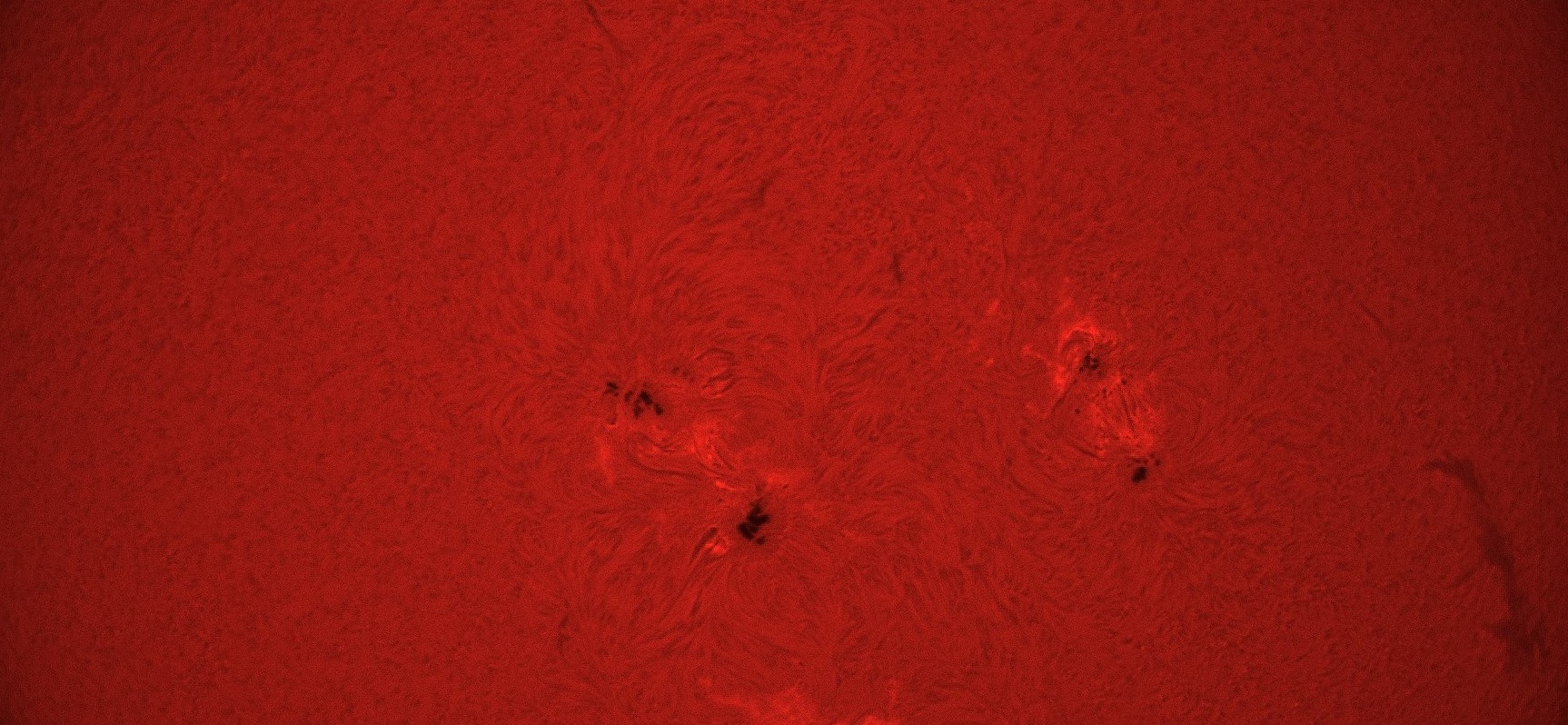
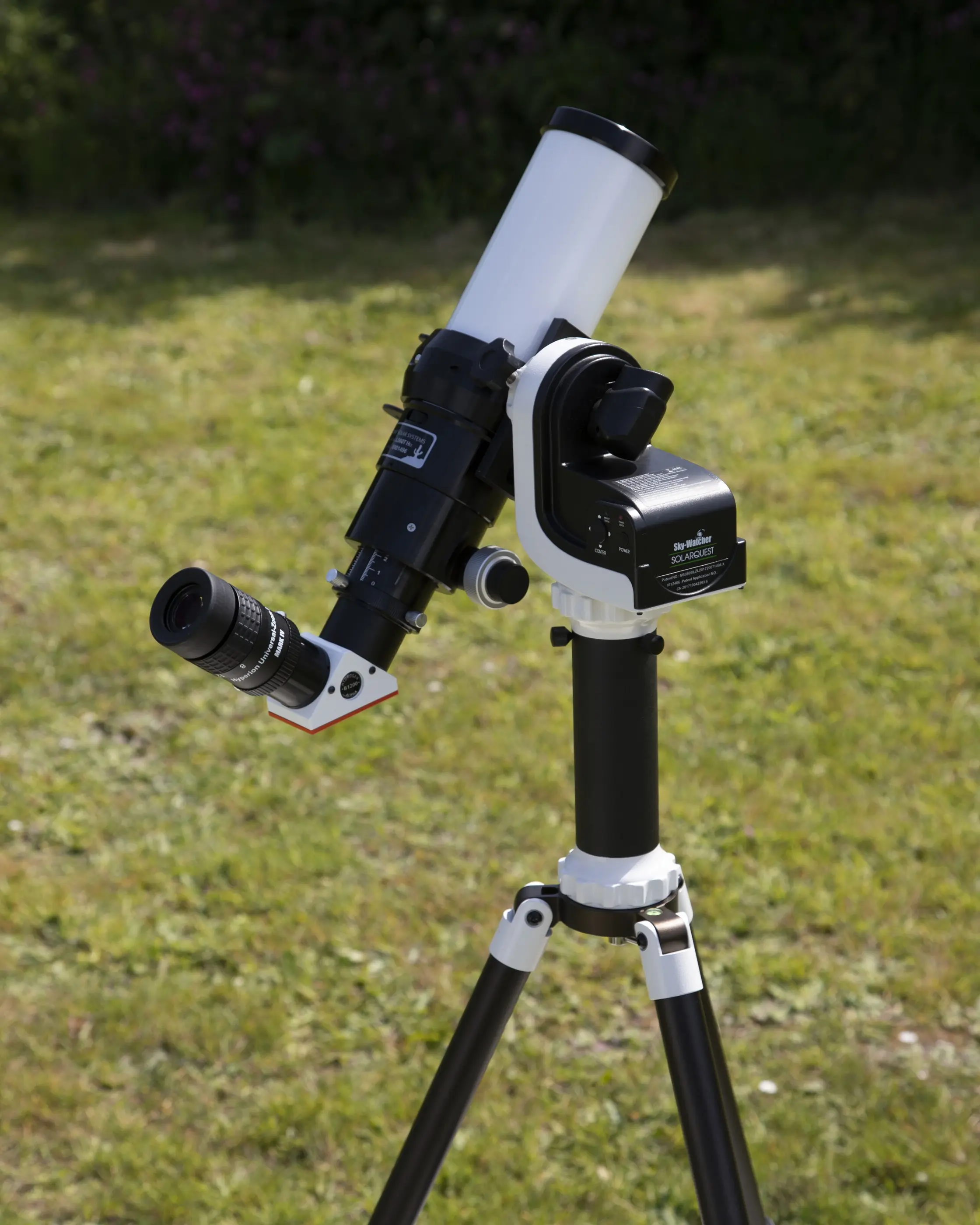
A highly specialised telescope that filters out all light except a specific wavelength emitted by hydrogen. You will be able to observe a dynamic, fiery red view of the solar atmosphere (chromosphere). You'll see solar prominences looping into space and bright plages.
What can we see?
The Sun is not just a static yellow ball; it is a dynamic, magnetic environment. Here are some features we might see:
Sunspots
Dark patches on the Sun’s surface caused by intense magnetic activity that cools the area down. They might look small, but many sunspots are larger than the entire Earth.
Prominences & Filaments
Massive loops of glowing gas anchored in the Sun’s atmosphere that erupt thousands of miles into space. When seen against the blackness of space, they are prominences; when seen flattened against the bright solar disc, they are called filaments.
Plages
Bright, cloud-like regions found in the chromosphere, usually surrounding sunspots. They mark zones of intense magnetic energy and are brilliant to spot through our H-Alpha telescope.
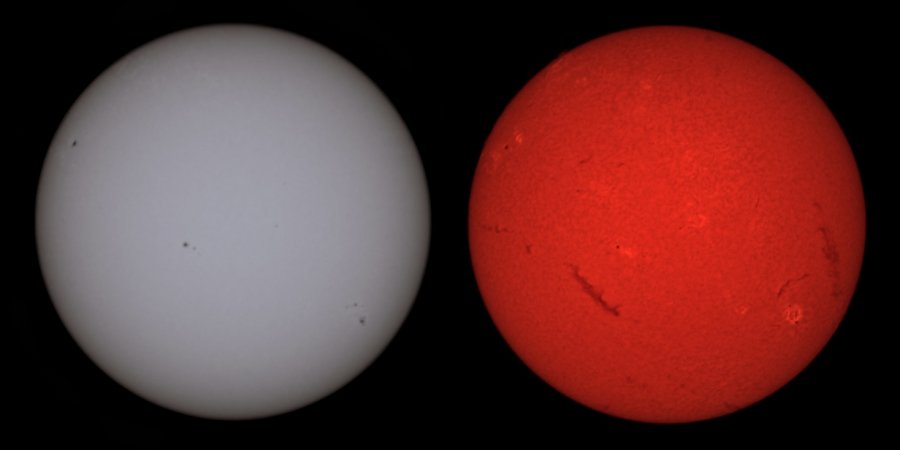
Credit: Elaine Mahy
Solar Transits
Occasionally, objects pass directly between Earth and the Sun.
- Planetary Transits: Rare events where Mercury or Venus appear as tiny black dots moving across the solar disc.
- The ISS: With the right timing, the International Space Station can be seen crossing the Sun, often in less than a second.
- Want to track the next space station flyover? Take a look at our ISS page.
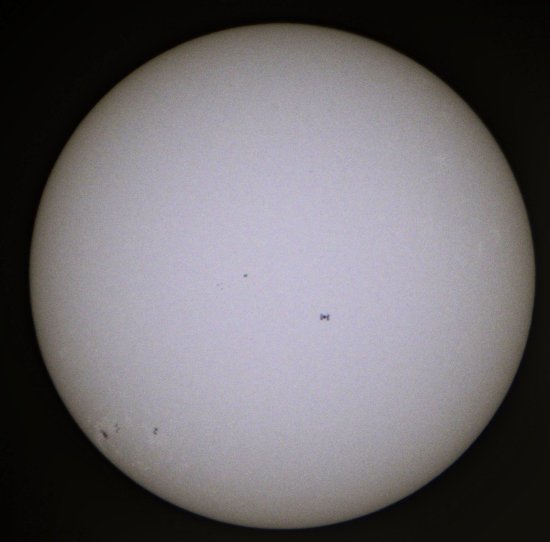
Credit: Elaine Mahy
Safe Observing: How to Protect Your Eyes
Safe solar observation is our top priority. At the open day, we will demonstrate the tools you need:
- Solar Eclipse Glasses: We will have certified ISO-compliant eclipse glasses available. Learn how to check them for scratches or damage.
- Pinhole Projection: The simplest DIY method: We’ll show you how to use a colander or two pieces of card to project the crescent shape of the eclipsed Sun safely onto the ground.
- Photography Setup: Thinking of taking a photo? We’ll show you the type of solar filters you must use to protect your camera or smartphone.
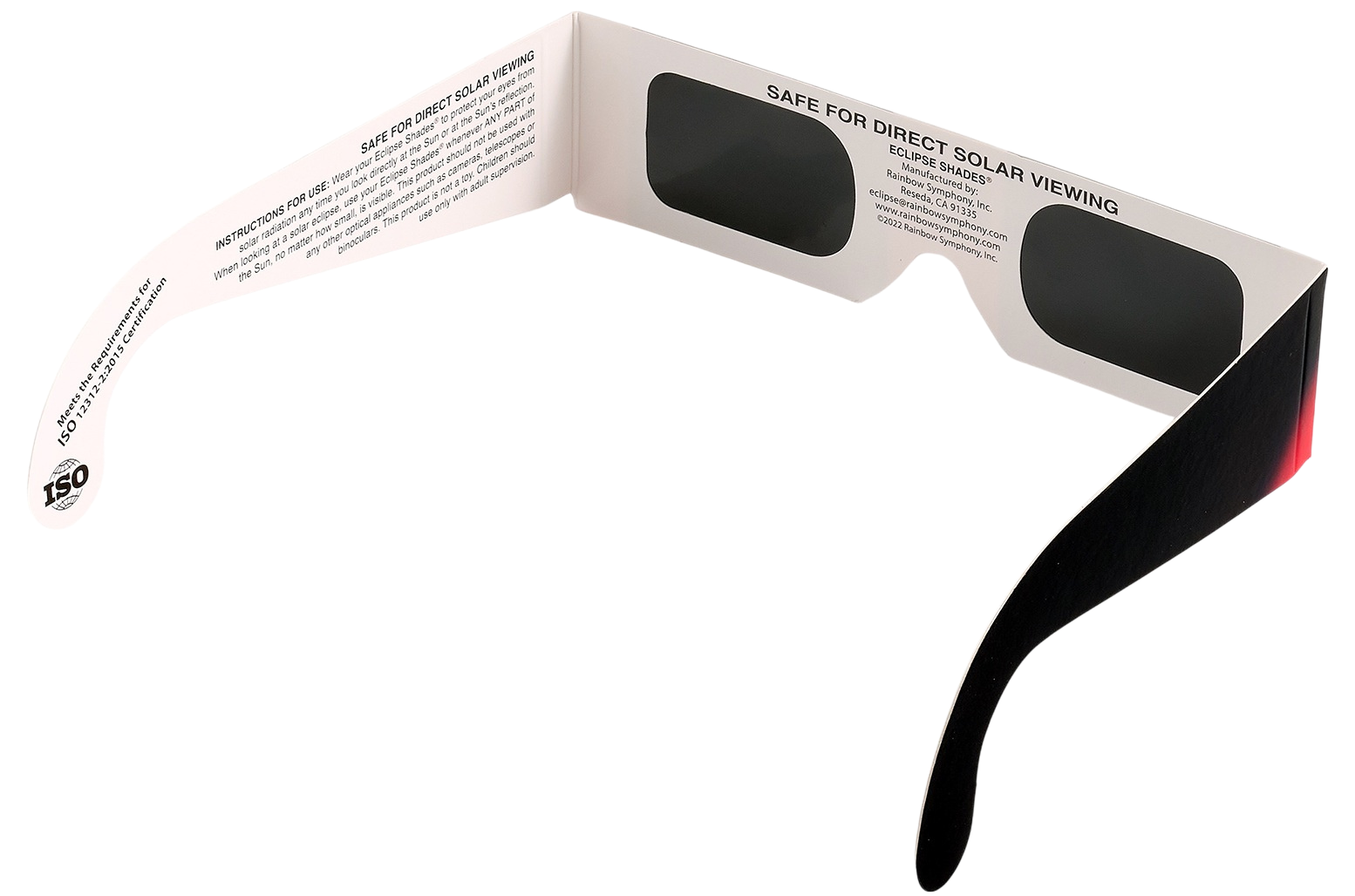
Solar eclipse viewing glasses with a marking showing they meet the requirement for ISO 12312-2:2015 certification. These block 99.999% of the light from the Sun as well as filtering harmful ultra violet and infrared light. Product image from First Light Optics.
Important
Please park at La Houguette School and walk to the observatory. There will be signs to guide you approximately 100m to Rue du Lorier. See our map for help finding us.
Note
Blue Badge holders are always welcome to use the observatory parking, but please take care manoeuvring amongst people.
You can access our risk assessment and guide for visitors.