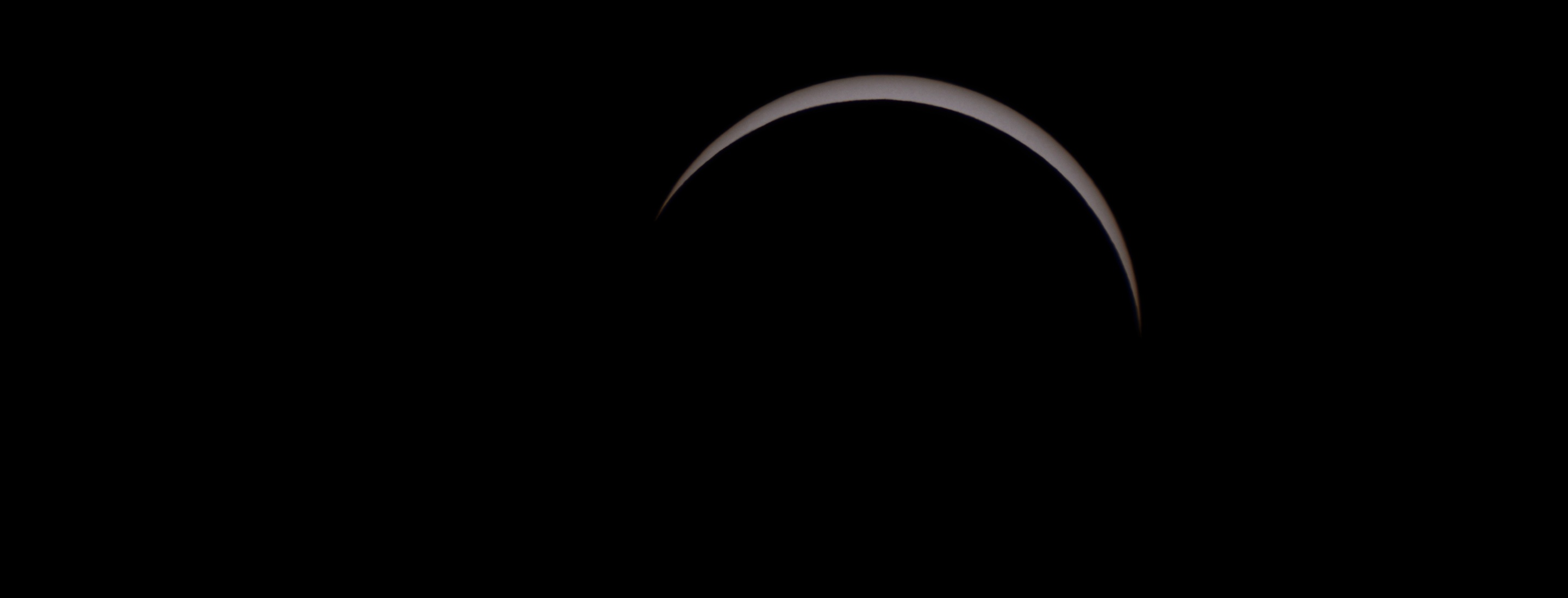
Partial Solar Eclipse
Contributions by members and friends of the Astronomy Section
Image Credit: Elaine Mahy
A Rare Astronomical Event
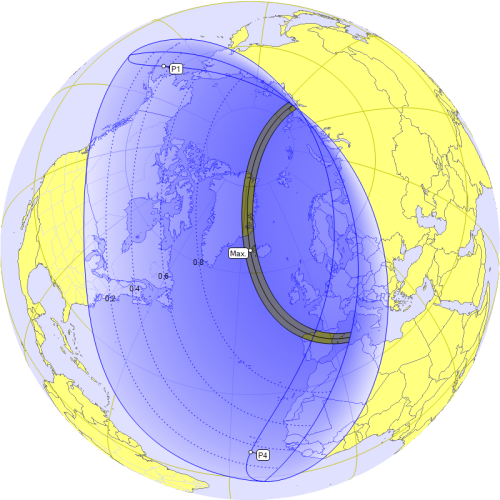
On 12th August 2026, skywatchers across Guernsey witnessed the Moon cover up to 94.5% of the Sun. While the line of totality tracked across parts of Russia, Greenland, Iceland, Spain and Portugal, the Channel Islands experienced their deepest partial solar eclipse in 27 years — the most significant since the famous 1999 eclipse. Section members invited families and friends to the Pleinmont Headland and enjoyed a view of the eclipse, a vibrant sunset, and for those willing to stay late, the Perseid meteor shower.
Public Engagement & Safety
Anticipating high interest from islanders, the Astronomy Section began a public awareness drive in late spring to promote safe solar observing across Guernsey and Alderney:
- Eclipse Glasses Distribution: The Section secured and distributed hundreds of certified eclipse glasses to members, the public, and local organisations, including the Guernsey Yacht Club, L'Ancresse Kiosk, Alderney Sailing Club, and Guernsey Sea Cadets.
- Public Solar Observing: Safe solar viewing sessions were hosted at the Candie Big Geekend, Lé Viaër Marchi, a dedicated Solar Open Day; and during regular Tuesday evenings where eclipse glasses were also available.
- Education & Media: Guidance on projection techniques and direct viewing safety was shared via dedicated website guides, social media posts, poster distributions, press releases, and local radio and TV interviews.
Observing at Pleinmont
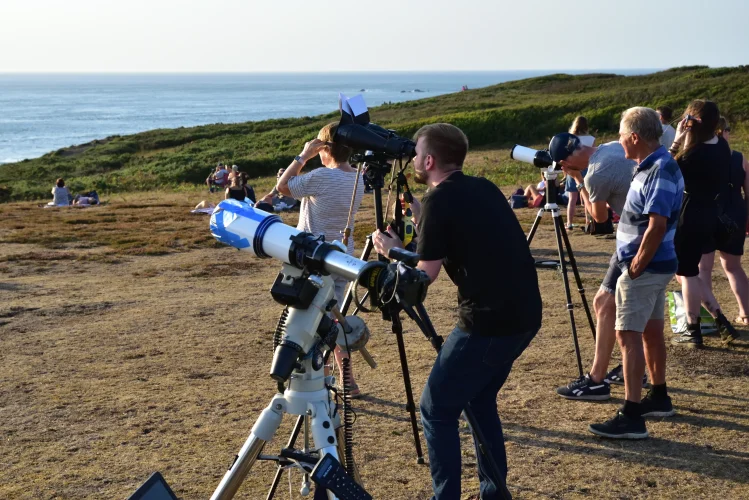
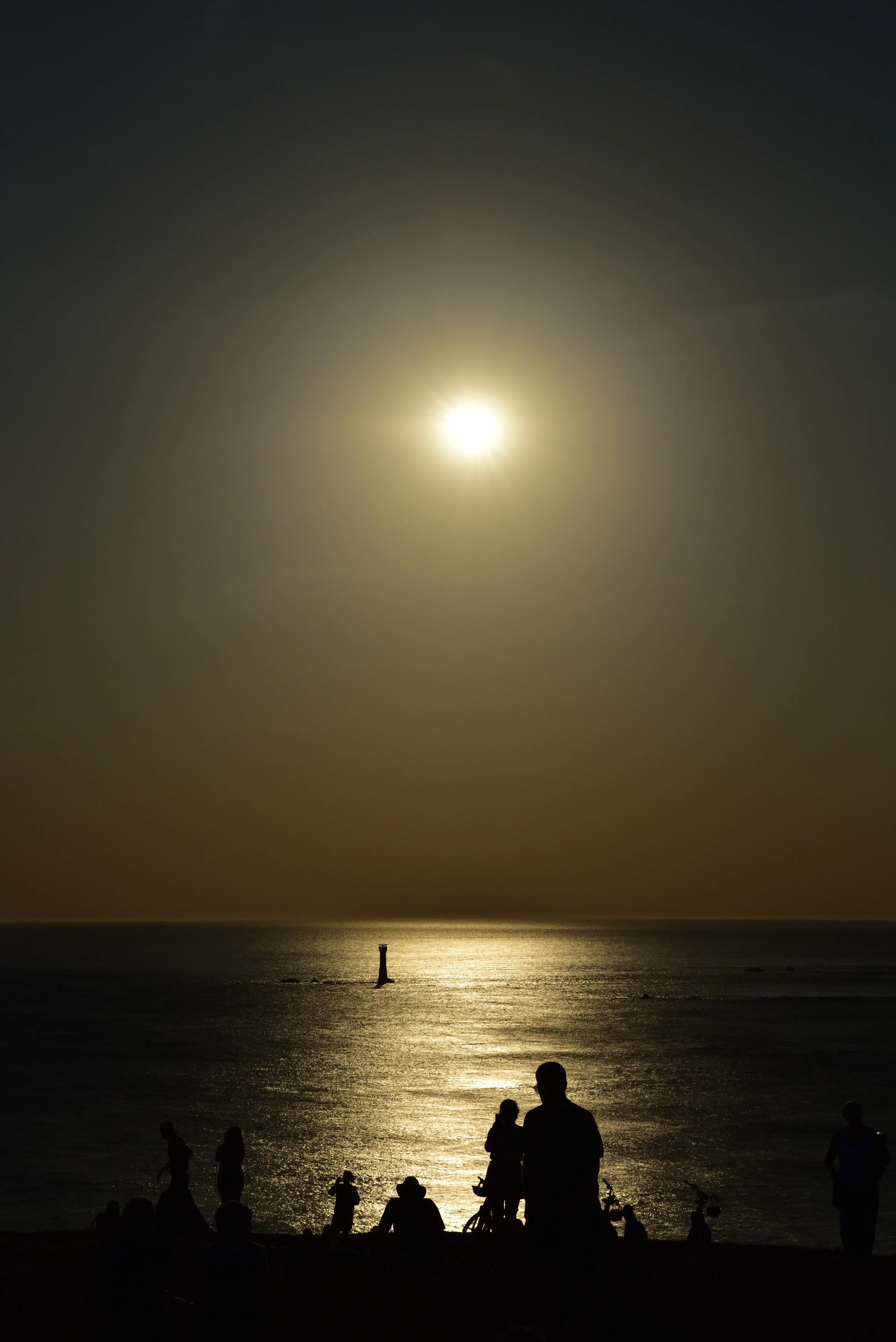
On eclipse day, Section members, families, and regular guests gathered on the sloping fields at Pleinmont, enjoying clear views down toward Les Hanois Lighthouse. Eclipse glasses were available for those who had been unsuccessful obtaining glasses before the event.
Attending observers brought a wide variety of equipment and experimental setups:
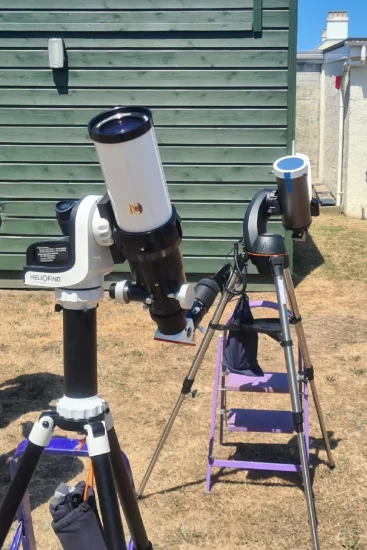
- Section Telescopes: A Lunt LS60T Hydrogen-Alpha (Hα) telescope on a SolarQuest mount offered detailed views of the solar chromosphere. A spectacular prominence was visible which was noticed even by those new to the Hα view. A Celestron Maksutov 102SLT displayed photosphere sunspots alongside the encroaching Moon.
- Member Equipment: Setups included smart telescopes (Seestar S50), telephoto cameras and telescopes with cameras attached, pinhole projectors, colanders, and filtered binoculars.
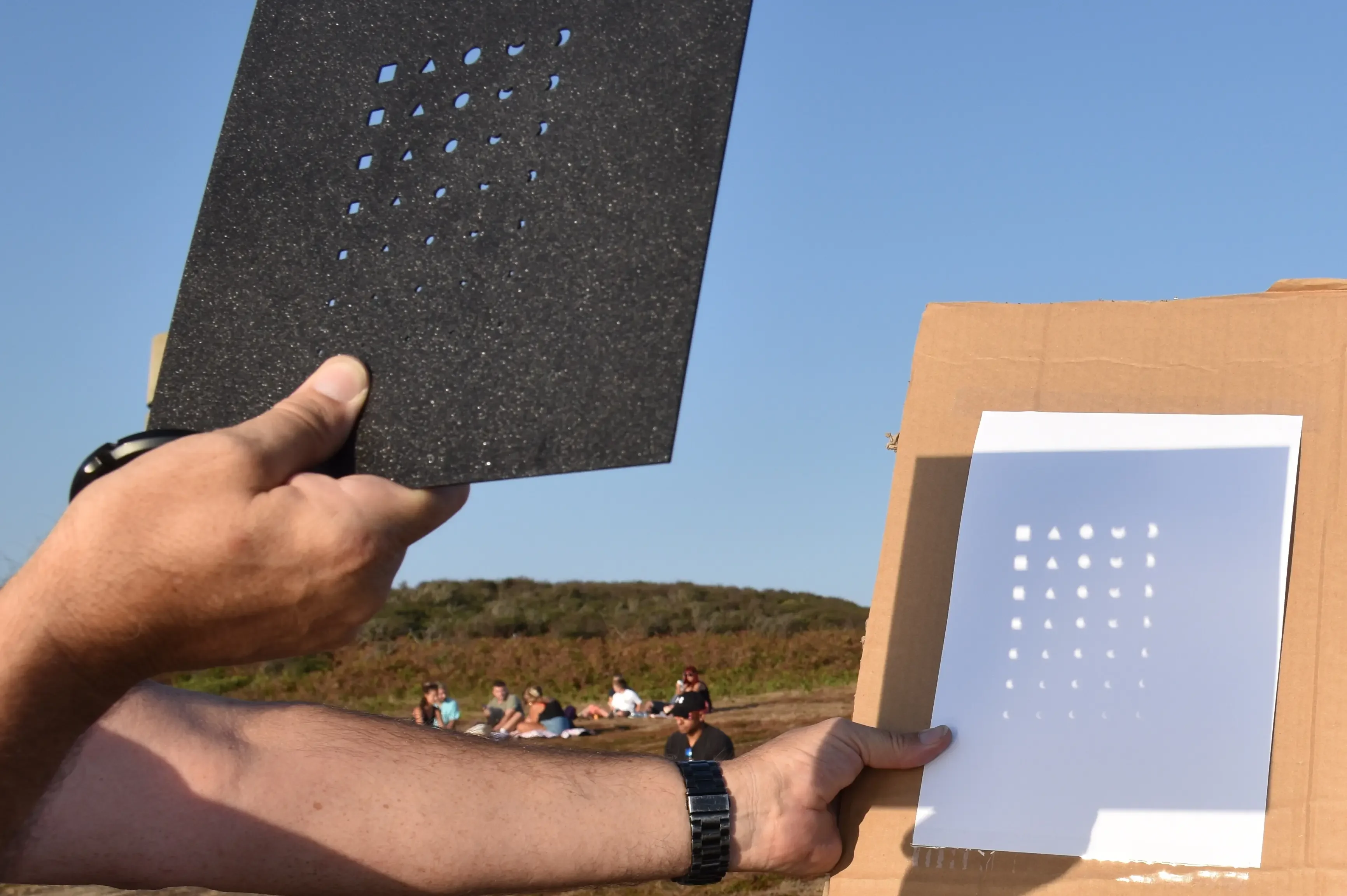
- Experiments: Clive Stubbings prepared a set of pinholes of different shapes and sizes, including squares, triangles and crescents; and Elaine Mahy used a rhodium-coated dental mirror to reflect a projection of the crescent Sun into a box. Take a look at the gallery below to see their results.
The Eclipse Experience
The eclipse started subtly, with observers noticing the small “bite” out of the Sun. There was time to appreciate the silhouette of the Moon increasingly covering the Sun, through eclipse glasses, telescopes, cameras and other gear. Around half an hour in, the light was noticeably changing. Everything took on a yellowish hue, quite a special light, and as the maximum eclipse approached, light levels dropped considerably; colours went flat, and the wind piped up significantly for a little while as changing light and temperature levels caused density and pressure differences.
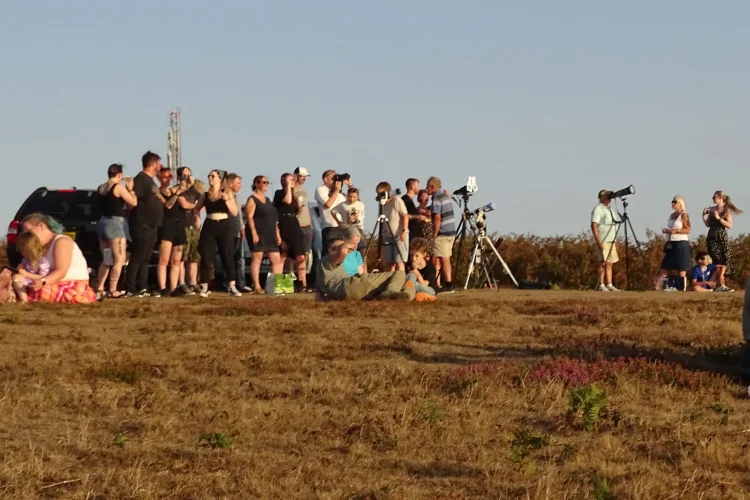
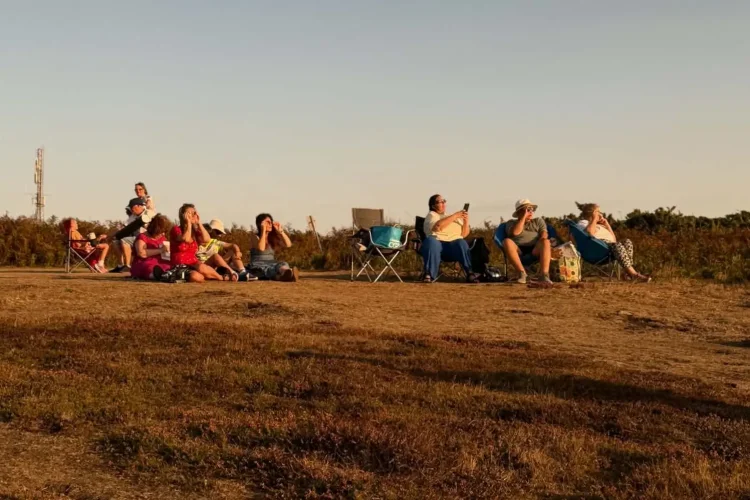
During the few minutes when the thin crescent of the Sun swung from left, over the top, to the right, many people were taking interesting photos, and looking through the telescopes, and wondering at this unusual spectacle.
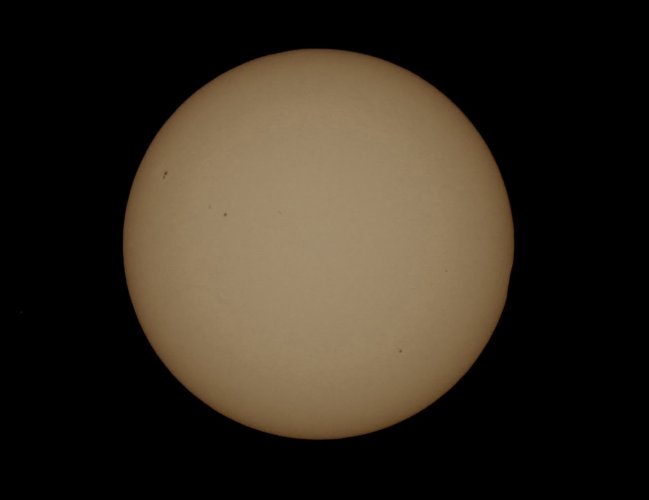
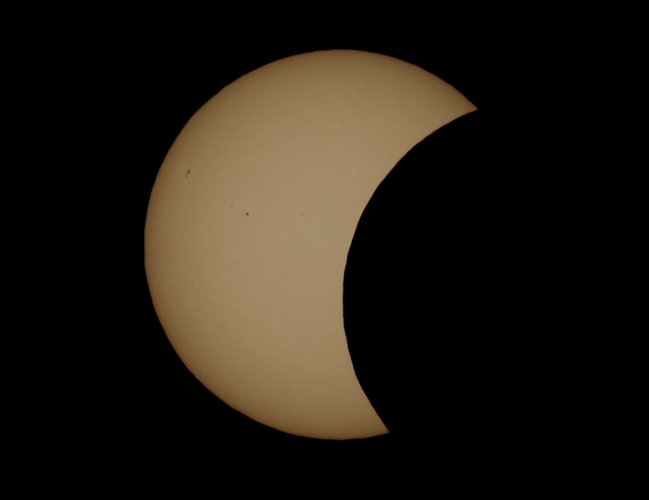
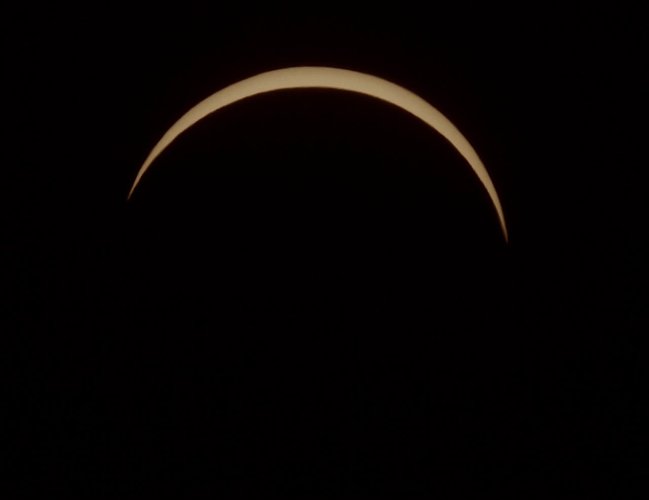
Image credits: Paul Gavey
Then, the light from the Sun started increasing again, and those who wished to watched the progress of the Moon past the Sun for the remainder of the eclipse. There was time to try out a few other eclipse observation methods during the second half of the eclipse.
Sunset Displays & The Perseid Meteors
As the eclipse concluded, a beautiful now complete Sun hovering over the horizon lighting up clouds above that looked like a crab in the sky, with some very clear crepuscular rays — shadows emanating from the clouds in a fan pattern against higher cloud. Then, at sunset, the Sun divided into two, with an inversion — a setting Sun and an upside down version above it!
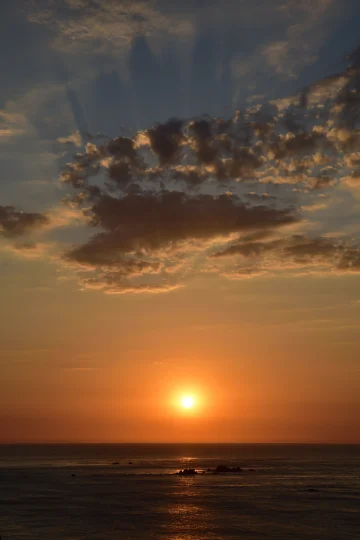
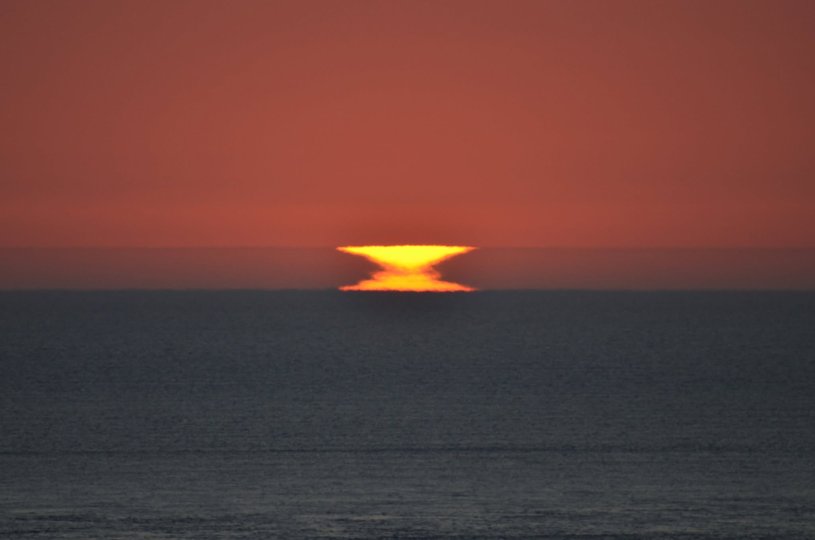
A few people later returned to the site to observe the Perseid meteors, which worked well as it was New Moon. Several meteors were seen with fiery trails, a gap, and a bright flash! And many more less impressive ones. The Milky Way was also impressive to the SSW.
Acknowledgements
Special thanks to Jackie Ward, Richard Hocart, and Jamie Hooper for advice and facilitating access and site permissions at Pleinmont, as well as to all Section members and volunteers who dedicated their summer evenings to public safety and telescope setup.
Gallery
Click the images for more information.
Content remains the property of the respective copyright holders.



Elaine Mahy held the mirror so as to reflect a pinhole projection into a box. The mirror doesn't have a glass layer for the light to pass through, so the reflection is very clear.
Elaine Mahy's projection from the dental mirror onto a white surface inside a box. The crescent Sun is very clear.
The pinholes vary in sizes, and the pinhole shapes include squares, circles, triangles and crescents. The bottom row has projected the crescent shape of the eclipse instead of the shape of the pinhole. As the black card is moved away from the projection screen, the larger pinholes also begin to show the same crescent projection.
Credit: Clive Stubbings.
Taken around maximum eclipse.
Credit: Dan Loller.
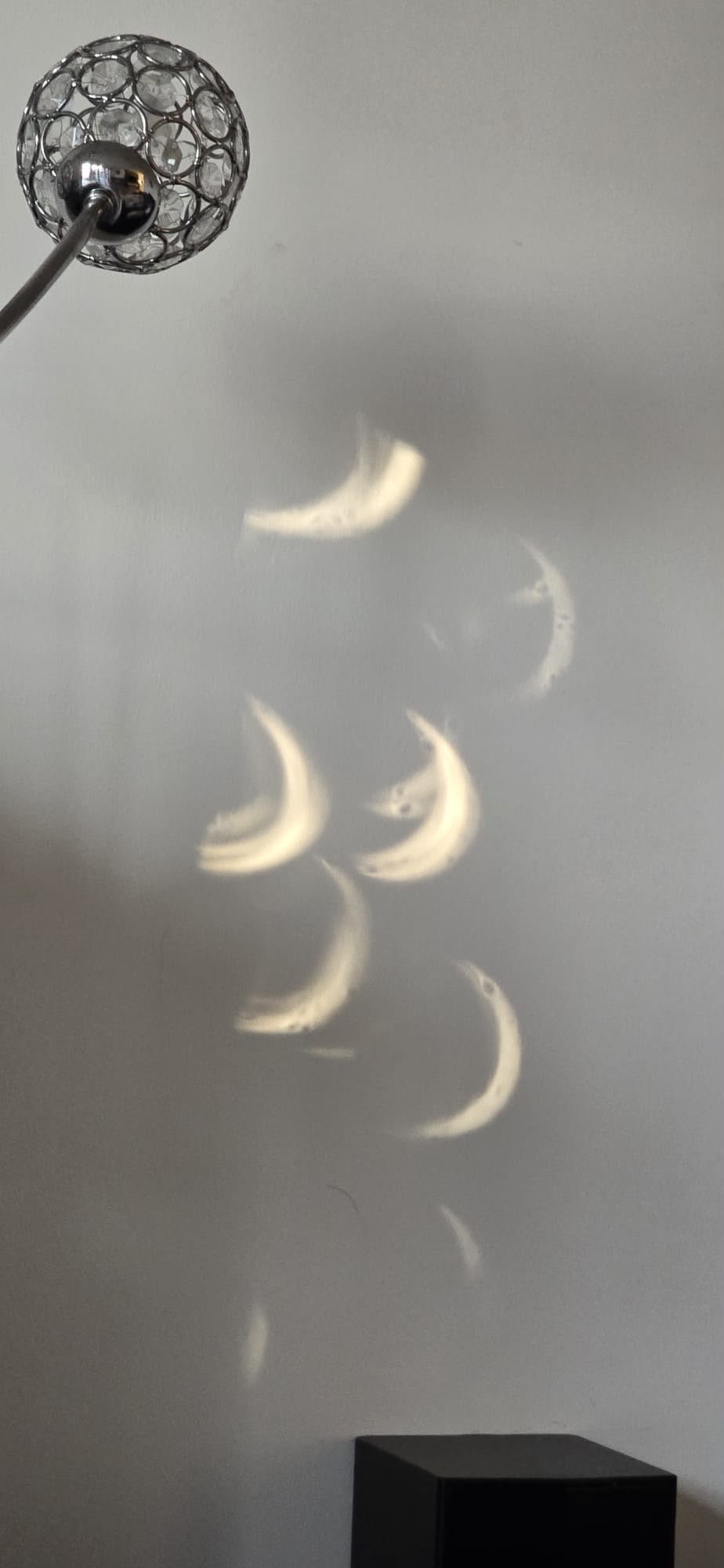
Sent in by a member who watched the eclipse from home, this interesting photo shows projections on an indoor wall about 7m from a tree.
Credit: Amy Sreeraj.
As the eclipse approached maximum, a patch of the horizon beneath the Sun became noticeably darker.
Credit: Robert Roue.
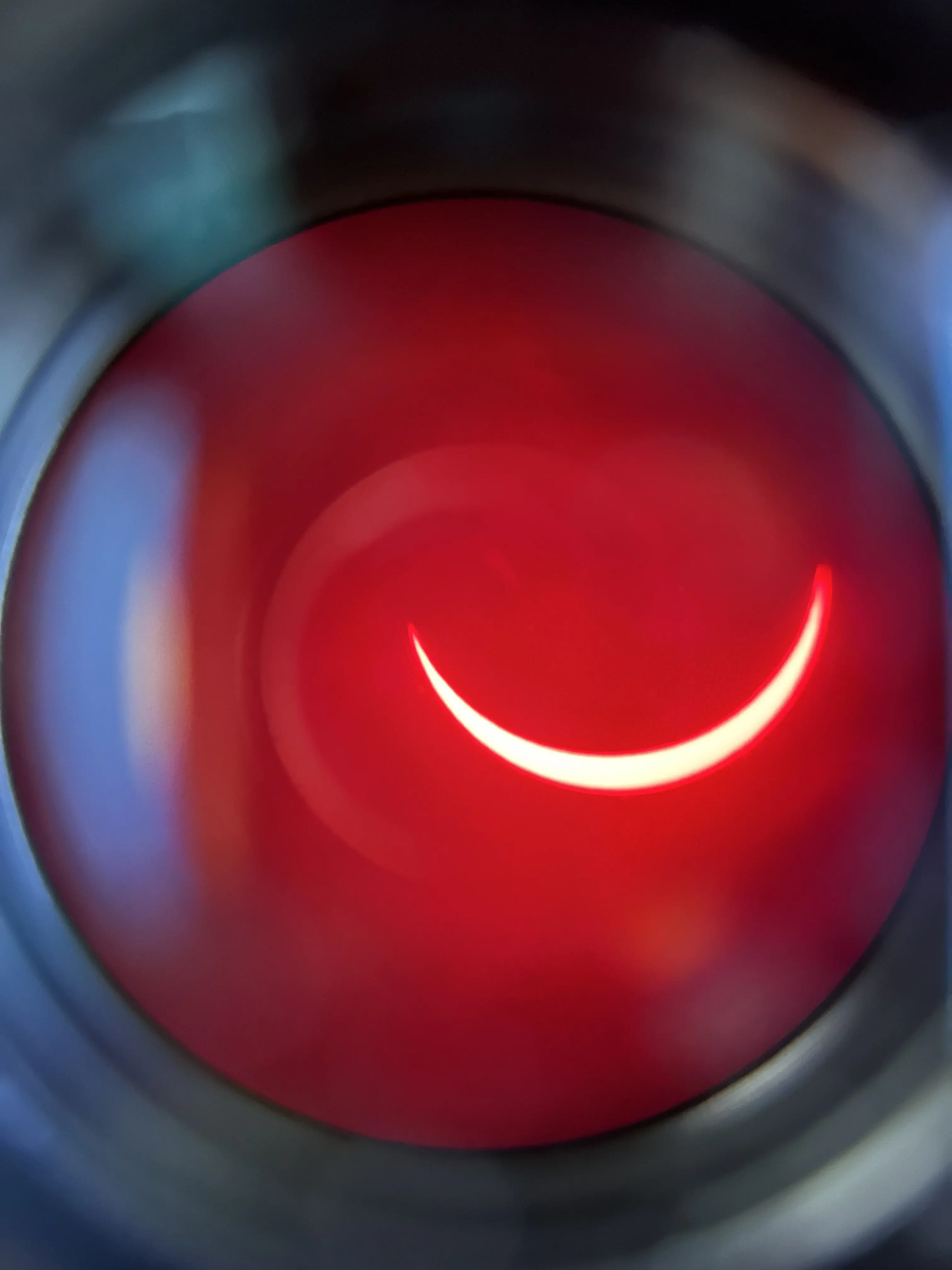
This photo was taken by simply holding eclipse glasses against the camera lens, and it's come out very sharp.
Credit: Imraan Moolla.
Assembled from photos taken by Elaine Mahy.